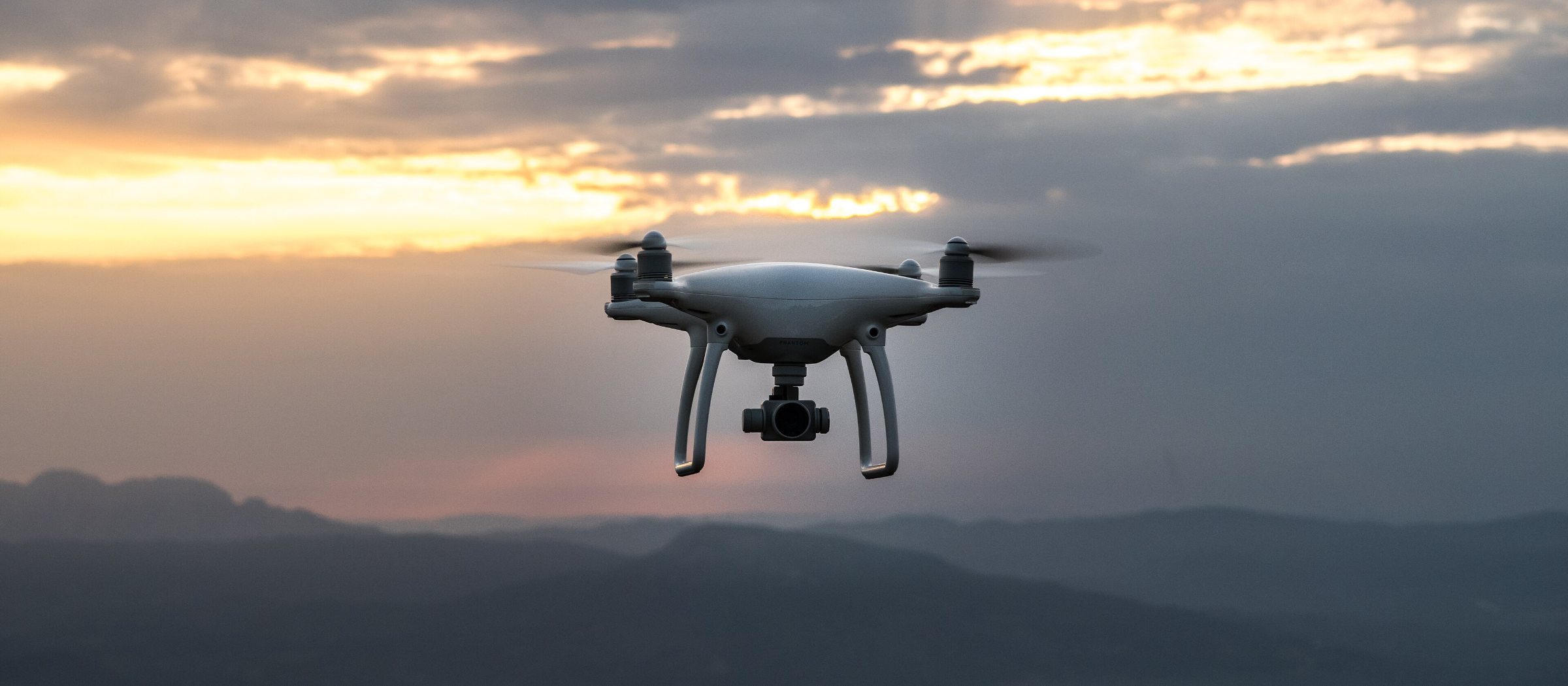
Not every drone is a threat. Know which one is.
Layered drone detection, tracking and assessment, with response where it is authorised.
Why · How · What
An alarm without assessment is only noise.
See small drones early and separate threat from nuisance, several sensor types covering each other's weaknesses, one track, and drone-detection radar, RF monitoring, EO/IR tracking and acoustic sensors
A layered counter-UAS system, selected for the site and the threat, and integrated into its security picture.
The need it answers
A layered counter-UAS system. Radar, RF monitoring, electro-optical and infrared tracking and acoustic sensors cover each other's weaknesses and are fused into one track on one display. Detection and mitigation are separate capabilities, and assessment comes before any response.
How it works
radar and RF sensors find the drone, whether it is emitting or silent.
detections are fused into one continuous track.
cameras and classification separate drone from bird, threat from nuisance.
the operator decides. Authorised users can mitigate.
What it does for you
Detects small drones at useful range, by day and night, in salt, wind and rain.
Shows the live trajectory and alerts automatically on entry into a restricted zone.
Fuses radar, RF and camera detections to confirm the target and cut false alarms.
Locates the pilot where RF sensing allows.
Supports a graded response and records the incident as evidence.
Adds airspace awareness to an existing security system instead of replacing it.
Scope
01
02
03
04
05
06
Markets
Know what is flying