Engines off. Port on.
Shore-to-ship power that lets vessels shut down at berth without slowing cargo.
Why · How · What
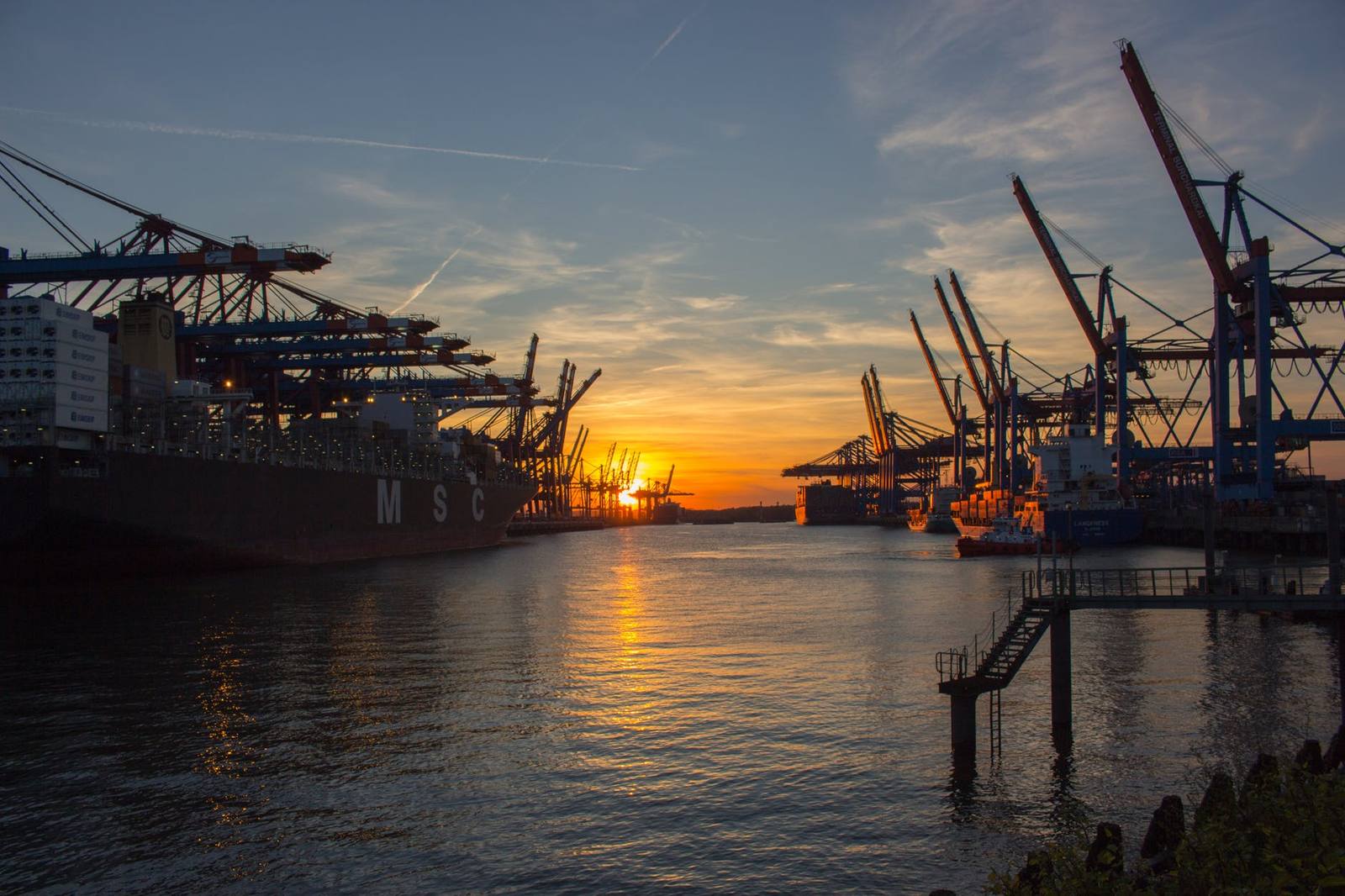
A port's air belongs to the city beside it.
Zero emissions at berth, cargo uninterrupted, green source to quay to ship, metered per call, and containerised station: frequency converters, battery storage, HV ring in ducts and flush outlet pits
A containerised, modular shore power system engineered around your port, to IEC/IEEE 80005 and IEC 62613, delivered at zero capex on BOOT.
Ports must cut the exhaust, noise and vibration produced by ships at berth, without slowing cargo operations. Cutting emissions where they affect people most also strengthens the local grid, makes the port a power utility and prepares it for tightening green-port requirements.
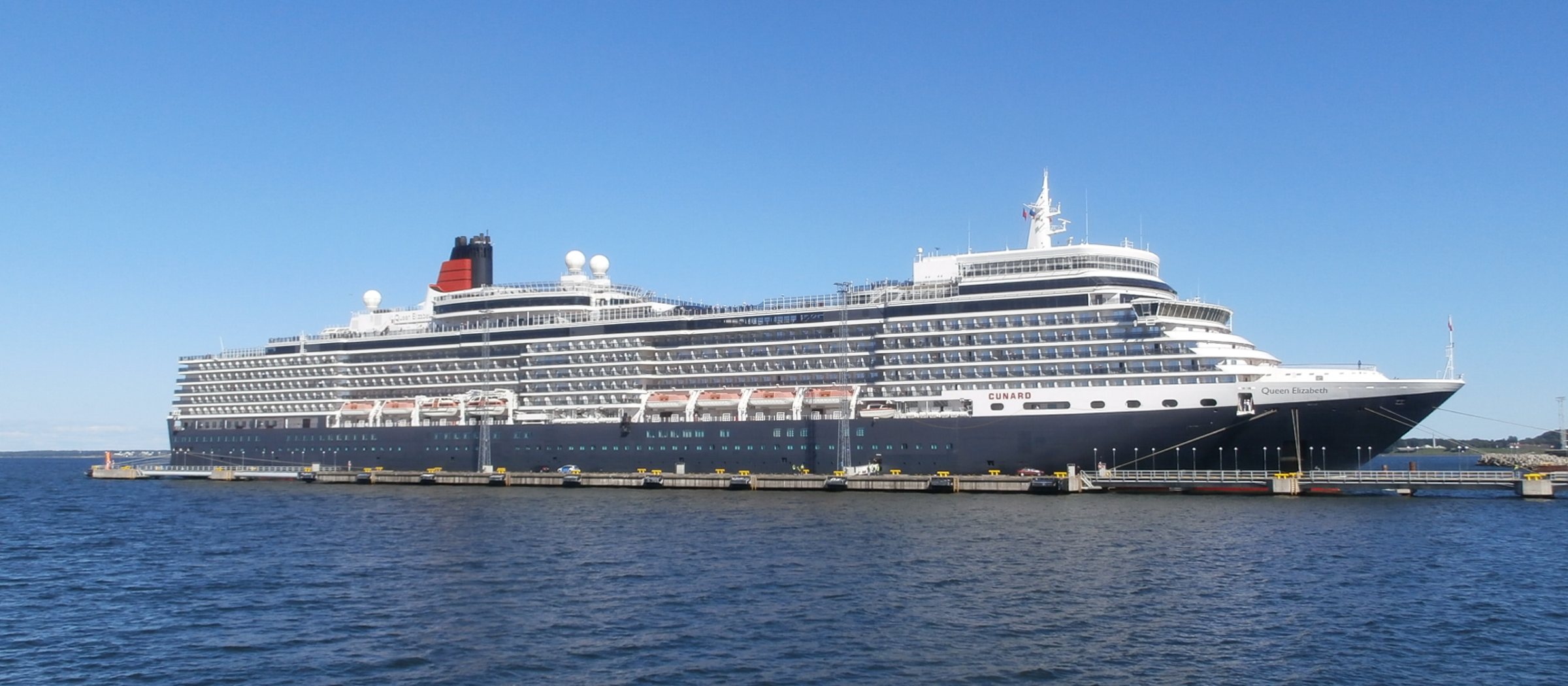
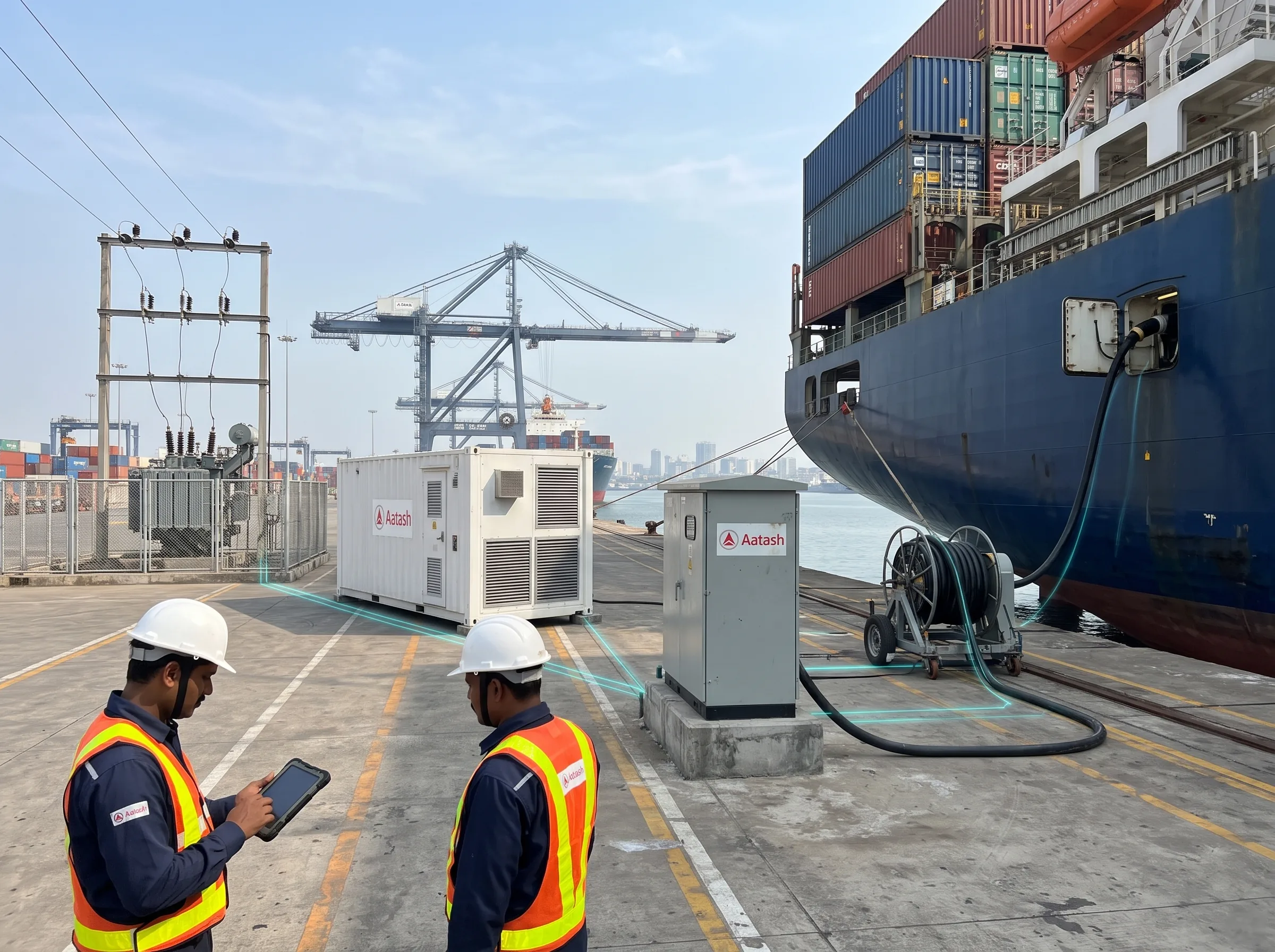
A ship alongside still needs power for cargo handling, reefers, pumps and hotel load. It usually makes that power by running diesel auxiliary engines next to the city, often for a day or more. In a single large container-ship call that can mean about 33 MWh of electricity, 7.3 tonnes of marine gas oil and 23 tonnes of CO₂ at the quay, plus NOx, SOx, particulates and noise (indicative: about 1.4 MW average hotel load over a 24-hour call). Shore-to-ship power, also called onshore power supply or cold ironing, connects the vessel to the grid instead. Aatash designs each system around four inputs: the vessels' needs (440 V, 6.6 kV or 11 kV; 50 or 60 Hz), the port's infrastructure and priorities, the regulations (IEC/IEEE 80005, IEC 62613, MARPOL Annex VI and national rules) and the best proven global technology. Its preferred model is BOOT: Aatash finances, builds, owns and operates the system at zero capex for the port, shares the revenue and transfers the asset at the end of the term. The connection, from grid to ship: substation, frequency converter, berth connection, shore switchboard.
How it works
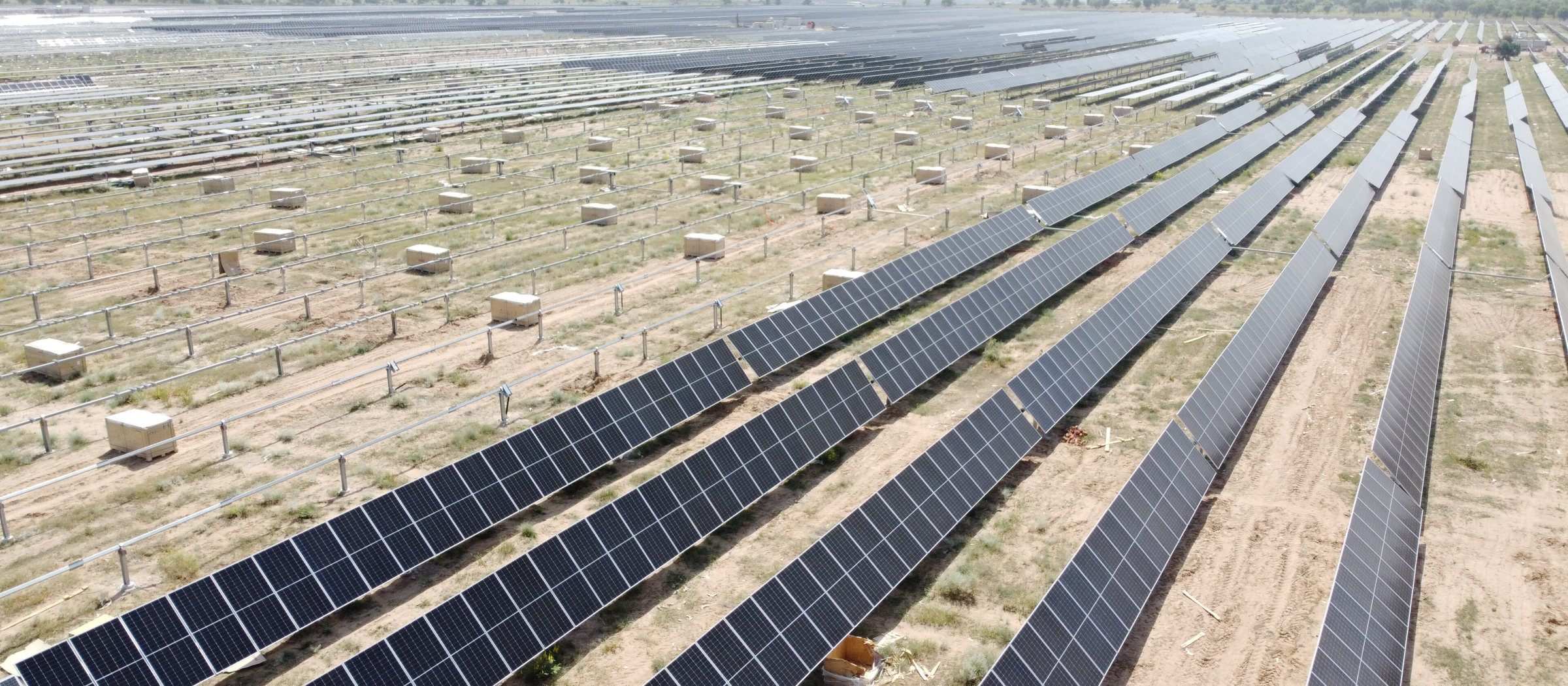
Port grid plus solar, brought in on a 33 kV feeder.
Frequency converters turn 50 Hz into the 60 Hz most ships need; isolation transformers deliver 6.6 or 11 kV.
An LFP battery shaves peaks and keeps the supply free of transients and harmonics.
Runs beneath the crane rails. Nothing is laid across the quay.
IEC 62613 sockets about every 70 m along the berth.
The ship's own reel lowers the cable, the load transfers and the gensets switch off. Energy is metered and CO₂ savings certified per call.
What it does for you
Cuts emissions at berth: CO₂, SOx, NOx and particulates, where they affect people most.
Reduces noise and vibration for crews, port workers and neighbouring communities.
Makes the port a power utility: a long-term revenue stream with low maintenance.
Strengthens the local grid. Modern frequency converters improve power factor and stability.
Prepares the port for IMO MARPOL Annex VI, India's Harit Sagar green-port guidelines, DGS Circular 09/2025 and shipping lines' net-zero targets.
Scope
01
02
03
04
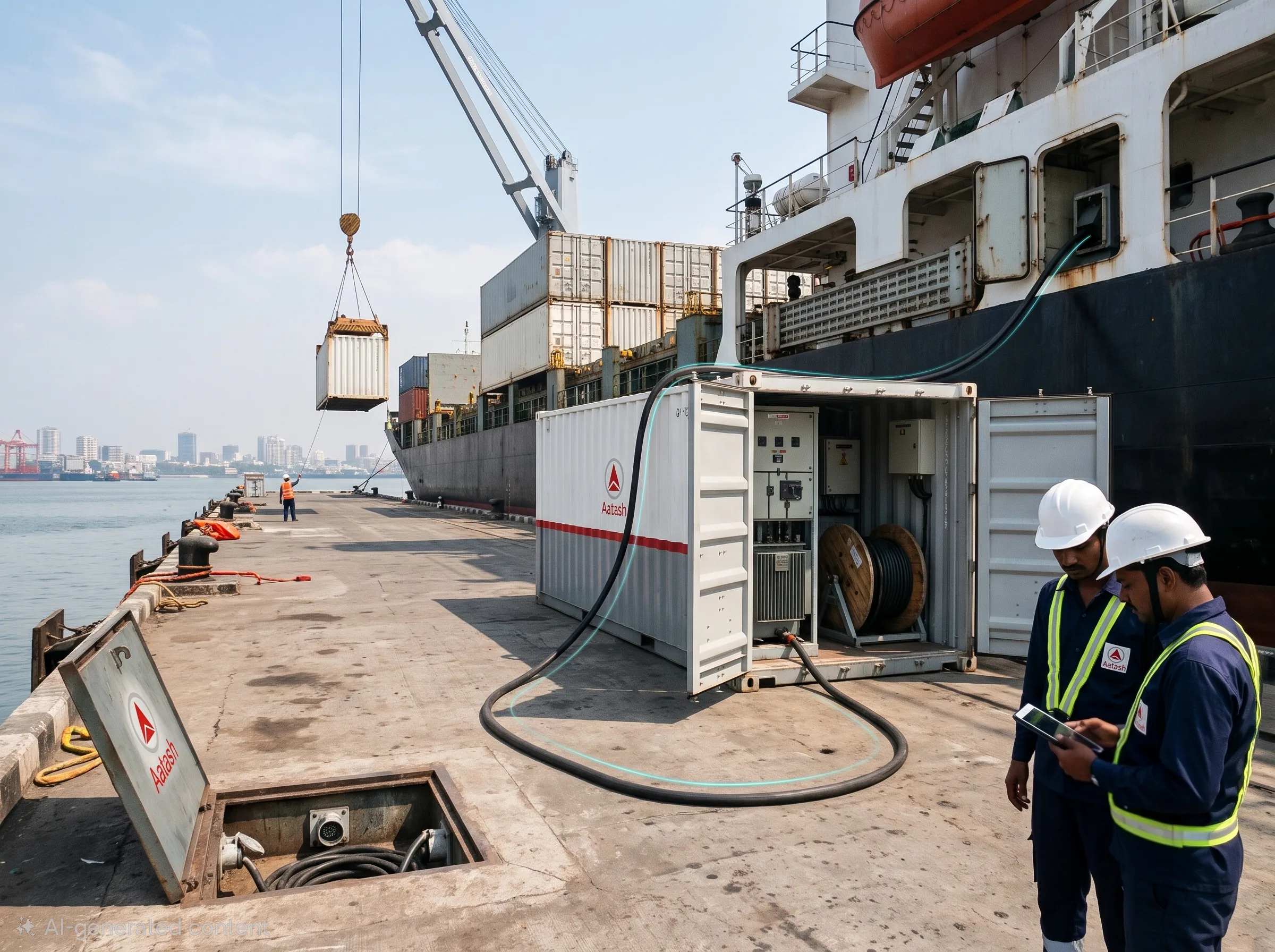
A: fixed outlet pits, flush sockets along the berth for the cleanest quay. B: a quay-side Aatash Shore Power Container, a 20 ft ISO unit with HV switchgear, transformer and cable reel, handled like any box. C: an on-deck container that the quay crane lifts into a deck slot, for narrow aprons. D: a hybrid of pits and containers to cover every berth. Smaller vessels use a mobile LV skid (6.6 kV / 440 V, to IEC/IEEE 80005-3).
Project readiness
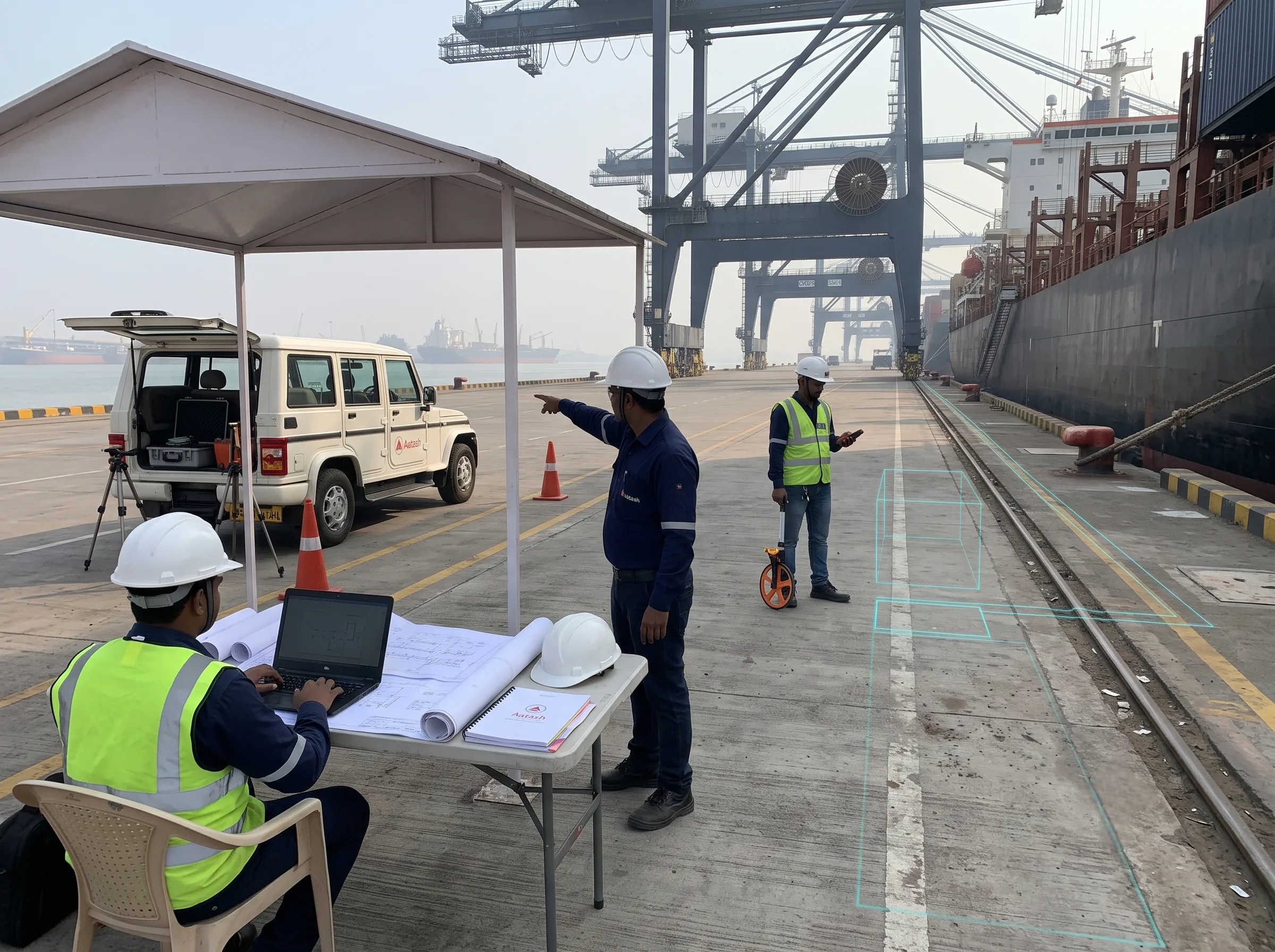
Aatash has prepared detailed project reports for shore-to-ship power at some of the key ports in India, using its specialised in-house engineering team.
Each study starts with the vessels a berth receives and the power they draw. It ends with a connection that is sized, costed and ready to build.
Sizing
under 11 kV · 50 and 60 Hz
up to 6.5 MVA
6.6 kV · 60 Hz
up to 7.5 MVA
6.6 and 11 kV · 60 Hz
16 to 20 MVA
6.6 kV · 60 Hz
up to 10 MVA
under 11 kV · 50 and 60 Hz
case by case
Markets
Plan your berth