Find the spill while it is still small.
Automatic, day-and-night oil spill detection, with position, area and drift.
Why · How · What
A spill found at dawn has had all night to spread.
Detect a slick at night, in bad weather, within minutes, detection inside the VTS or as a stand-alone watch, and x-band radar processing, satellite imagery and IR confirmation
Radar-based and satellite-based oil spill detection, with alarm, outline, drift prediction and evidence.
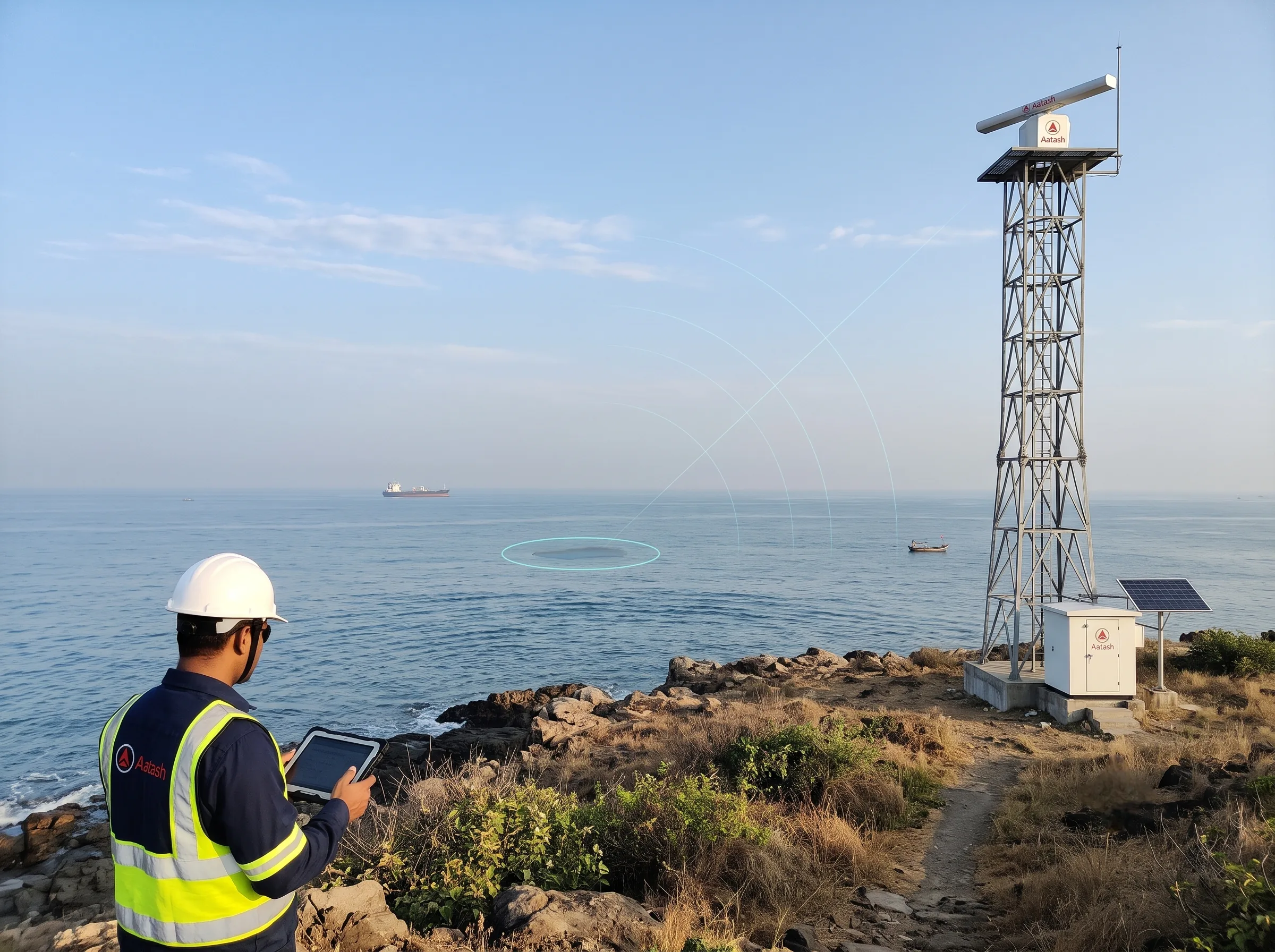
Radar-based oil spill detection uses marine X-band radar to detect the change that oil makes to the sea surface. It works automatically, by day and by night, and raises an alarm with the position, area and drift of the slick. Satellite-based detection extends the watch beyond radar range.
When you need it
Tankers, terminals or platforms operate in your waters.
A spill must be found at night and in bad weather.
You need to show where it came from.
What it adds
Early warning — continuous, automatic monitoring instead of chance sightings, with the alarm refreshed every few minutes.
Response support — outlines the slick, tracks it and predicts drift using wind and current data.
Accountability — links the slick to the likely source vessel using recorded tracks.
Evidence — time-stamped records for regulators and insurers.
Scope
01
02
03
04
05
06
Case · Proof
Performance figures are those published by Aatash Norcontrol for its radar-based system. Range depends on tower height, sea state and wind.
Markets
Spot spills early